Shockwave Therapy for Common Orthopedic Conditions

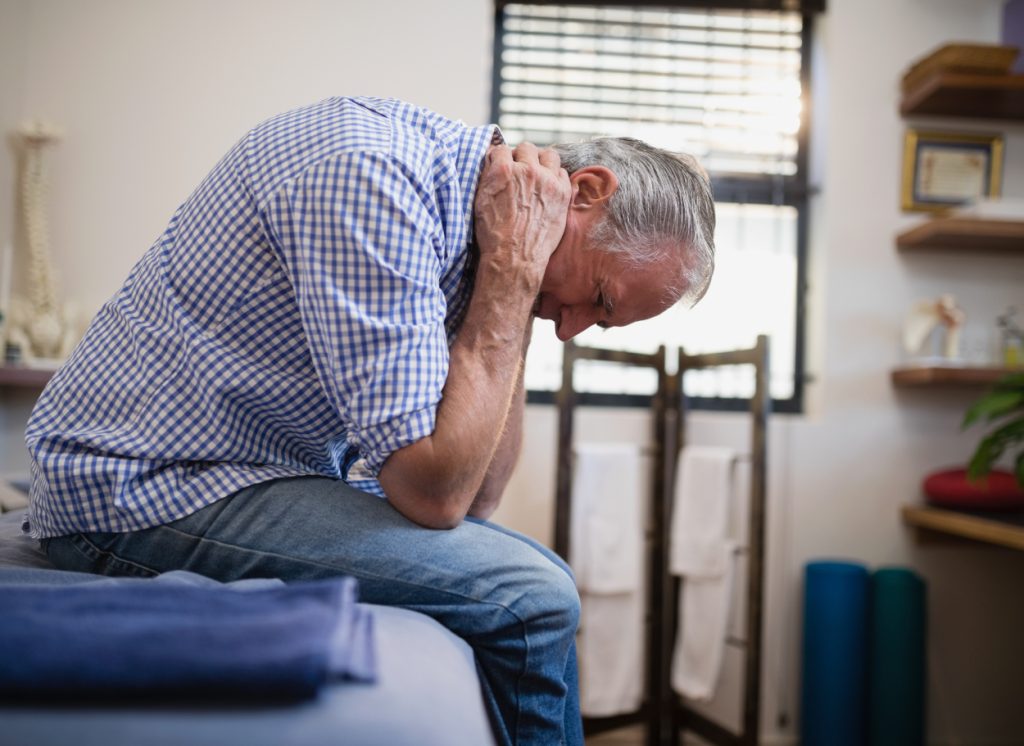
Orthopedic pain has a way of narrowing a person’s life in small, stubborn increments. It starts with a sore heel that makes the first steps of the morning unpleasant. Then it becomes the reason someone stops walking the dog, skips a weekend hike, or shifts weight away from one side until the knee or back starts complaining too. The same pattern shows up in shoulder tendinopathy, tennis elbow, Achilles pain, and chronic irritation around the kneecap. These are not dramatic injuries in the way a fracture or torn ligament is dramatic, but they can linger for months and wear people down.
That is where Shockwave Therapy has earned a place in modern musculoskeletal care. It is not magic, and it is not a cure-all. Used well, however, it can be a practical option for selected orthopedic conditions, especially when the problem has become chronic and the tissue has stopped progressing with basic care alone. In clinic settings, it often fills the gap between standard conservative treatment and more invasive steps such as injections or surgery.
The value of the treatment lies partly in what it is not. It does not require incisions, sedation, or immobilization afterward. Patients typically walk in, have treatment performed in the office, and walk out. That convenience matters, but convenience alone is not enough. The real question is whether it helps the right patient, with the right diagnosis, at the right time. That is where clinical judgment matters most.
What Shockwave Therapy actually is
Shockwave Therapy uses acoustic energy delivered to tissue through the skin. The device generates pressure waves that travel into the target area. In orthopedic care, those waves are typically directed at chronically irritated tendons, tendon insertions, fascia, or areas with stubborn soft tissue pain. Depending on the machine and treatment goal, the energy may be focused more deeply or dispersed more superficially.
The name can sound more dramatic than the actual experience. Patients often expect something that feels electrical or dangerous. It is neither. Most describe it as a series of rapid taps or pulses, with discomfort that rises when the applicator reaches the tender spot. That discomfort is usually tolerable, and treatment sessions are relatively brief, often lasting only several minutes per area.
The exact biological effects are still studied, but the practical framework is familiar to clinicians who treat tendon disorders. Chronic tendon pain is often not driven by classic inflammation alone. Many long-standing overuse injuries show disorganized collagen, altered blood vessel patterns, local sensitivity, and stalled healing. Shockwave Therapy appears to stimulate a repair response, improve local circulation, influence pain signaling, and encourage tissue remodeling in a way that can restart progress when symptoms have plateaued.
That does not mean the machine does all the work. In most successful cases, shockwave is one part of a broader plan that includes load management, mobility work, and progressive strengthening. The treatment can reduce pain enough to let patients actually do the rehab they have been avoiding or failing to tolerate.
Where it tends to help most
The strongest real-world use of Shockwave Therapy is in chronic conditions that have persisted despite sensible conservative care. Someone who strained a tendon last week is rarely the ideal candidate. Someone who has had heel pain for eight months, tried supportive shoes, calf stretching, activity changes, and targeted exercise, that person is much closer to the profile where shockwave may make sense.
Clinically, the conditions that come up again and again include plantar fasciitis, Achilles tendinopathy, lateral epicondylitis of the elbow, patellar tendinopathy, and certain calcific shoulder problems. These are common complaints in active adults, workers with repetitive strain, and even people whose main “sport” is simply staying mobile through a long workweek.
The common thread is chronicity. Once tissue becomes persistently painful, it often stops behaving like an acute injury and starts acting like a failed adaptation. Rest alone usually does not fix that. Many patients have already tried resting, in fact, and found that pain returns as soon as they resume normal life. Shockwave is often most helpful when paired with a more intelligent return to loading.
Plantar fasciitis, the first-step pain that changes everything
Plantar fasciitis is probably the condition most people associate with Shockwave Therapy, and for good reason. It is common, frustrating, and often surprisingly slow to resolve once it becomes chronic. The classic story is easy to recognize: sharp pain under the heel with the first few steps in the morning, soreness after sitting, and worsening symptoms after long periods of standing or walking.
Many cases improve with time, supportive footwear, calf flexibility work, and a gradual strengthening program for the foot and lower leg. But some do not. By the time patients consider shockwave, they have often cycled through inserts, ice, anti-inflammatory medication, massage tools, and occasional stretching that was too inconsistent to change much.
In those stubborn cases, Shockwave Therapy can be useful because it targets the degenerative tissue response near the heel attachment of the plantar fascia. It does not “break up scar tissue” in the simplistic way people sometimes describe it, but it can shift the local environment enough to reduce pain and encourage recovery.
The practical issue with plantar fasciitis is that treatment cannot stop with the machine. If the person leaves the office and returns to the same worn-out shoes, the same abrupt jump in walking volume, and the same stiff calves and weak foot mechanics, progress will be limited. Good results tend to come when shockwave is integrated with better footwear choices, measured increases in walking, and exercises that improve the capacity of the calf complex and intrinsic foot muscles.
One of the more satisfying clinical patterns is the patient who has avoided movement because every step felt threatening. Once pain starts to drop, even modestly, confidence returns. That matters. Pain is not just a tissue problem, it is a behavior problem too. People stop loading the area normally, and the whole chain gets weaker.
Achilles tendinopathy, where patience matters
Achilles tendinopathy can be humbling. It affects runners, recreational athletes, and people who are not particularly athletic but spend long hours on their feet. Midportion Achilles pain usually appears a few centimeters above the heel, while insertional Achilles pain sits closer to the calcaneus and can be trickier to manage.
Shockwave Therapy is often considered when symptoms https://paxtonkqen100.quillnesty.com/posts/shockwave-therapy-for-shoulder-pain-treatment-insights-2 have persisted for several months and eccentric or heavy slow resistance loading has not produced enough change. In practice, many patients have been doing “calf exercises” without a real progression plan. Others are trying to train through pain five or six days a week. Both patterns can keep the tendon irritated.
When shockwave is used for the Achilles, expectations need to be realistic. This is not the treatment to get a runner pain-free in three days before a race. Tendons generally improve over weeks and months, not hours and days. A better framing is that shockwave may reduce pain, improve tolerance to rehabilitation, and help a chronic tendon finally respond to the loading it needs.
Insertional Achilles cases deserve special attention because they can become aggravated by aggressive stretching or exercises that compress the tendon too much at the heel. This is where treatment planning needs nuance. Shockwave may still be beneficial, but exercise selection often needs modification. Flat-ground heel raises may be better tolerated than dropping below the step, at least early on.
Tennis elbow and other stubborn elbow tendon pain
Lateral epicondylitis, commonly called tennis elbow, is another condition where Shockwave Therapy often enters the conversation after simpler treatment has fallen short. Despite the name, many people with tennis elbow have never played tennis. It shows up in mechanics, office workers, tradespeople, lifters, and parents carrying children with the wrist in awkward positions all day.
The pain usually sits on the outside of the elbow and flares with gripping, lifting, pouring from a heavy container, or typing and mousing for long stretches. The problem is often an overloaded extensor tendon origin rather than a true inflammatory process.
These cases can become chronic because the provoking movements are tied to everyday life. A runner with Achilles pain can sometimes modify training. A carpenter or hairstylist may not be able to stop using the hand and forearm that hurts. That is one reason elbow tendinopathy can drag on.
Shockwave Therapy can be a useful addition here, particularly when paired with grip modification, forearm loading exercises, and ergonomic changes. It is not unusual for patients to report that the area feels sensitive during treatment but less irritable over the next few weeks. The timeline is rarely immediate. More often, they notice they can hold a coffee mug more comfortably, then carry groceries, then return to gym work with less apprehension. Those incremental gains are the real markers of success.
Patellar tendinopathy in jumping and squatting athletes
Patellar tendon pain, sometimes called jumper’s knee, is common in athletes who do repeated jumping, sprinting, or heavy knee-dominant training. It can also affect recreational lifters who increase volume too fast. The tendon becomes painful just below the kneecap, especially with jumping, lunging, squatting, or going downstairs.
This condition can be especially frustrating because imaging and pain levels do not always match in a neat way. A tendon can look structurally abnormal and function well, or look only mildly changed and be extremely painful. That is why treatment decisions should not be made from imaging alone.
Shockwave Therapy may help in chronic cases, but patellar tendinopathy almost always requires a serious rehabilitation plan. If an athlete wants a passive treatment that allows them to keep the same training load without change, disappointment is likely. The tendon needs graduated loading, sensible monitoring of symptoms, and honest decisions about what to reduce for a few weeks.
When used well, shockwave can calm the pain enough to make those loading exercises more tolerable. Isometrics, controlled squats, and eventually sport-specific plyometrics all have a place. The treatment supports the plan, it does not replace the plan.
Calcific shoulder tendinopathy and why diagnosis matters
Shoulder pain is a broad category, and not all shoulder pain responds the same way. Shockwave Therapy has a clearer role in calcific tendinopathy of the rotator cuff than in vague, poorly defined shoulder discomfort. In calcific tendinopathy, calcium deposits form within the tendon, often the supraspinatus, and can become very painful, particularly with overhead reach and sleeping on that side.
These patients sometimes arrive after months of “shoulder impingement” treatment that never quite matched the underlying problem. If imaging confirms calcific change and the clinical exam fits, shockwave may help reduce pain and in some cases assist the body’s resorption process. Focused shockwave is often discussed more in this context than radial treatment, though availability varies by practice.
This is one of the better examples of why precise diagnosis matters. A shoulder that is painful because of neck referral, adhesive capsulitis, or a traumatic tear is a different situation entirely. Shockwave should not be applied as a generic answer to every painful joint.
What treatment feels like and how the course usually runs
A typical course involves several sessions spaced about a week apart, often somewhere between three and six treatments depending on the condition, the device used, and patient response. Some people feel improvement after one or two sessions. Others notice little at first and then realize, around week four or five, that they are moving more freely.
During the procedure, gel is applied to the skin and the handpiece is placed over the target area. The provider usually starts at a lower intensity and adjusts based on tolerance and treatment goals. Tender spots can be quite sensitive, especially around the heel or elbow, but treatment is brief. Most people do not need anesthesia. Afterward, the area may feel mildly sore for a day or two, much like it has been worked on deeply.
Patients often ask whether they should rest completely afterward. Usually, no. Relative activity modification is more useful than total rest. The exact advice depends on the tissue being treated, but in many cases normal daily movement is encouraged while high-irritation activities are dialed back temporarily.
When Shockwave Therapy is a good fit, and when it is not
There is a practical difference between a treatment that can help and a treatment that should be used. Shockwave is best considered in a fairly specific window: chronic soft tissue pain, a confirmed diagnosis, and incomplete response to a structured conservative program.
Here are situations where it tends to make the most sense:
- Symptoms have lasted for several months rather than days or a couple of weeks
- The diagnosis points toward a chronic tendon or fascia problem
- Basic treatment, such as exercise and load modification, has not been enough
- The patient wants to avoid or postpone injections or surgery
- The tissue can still be progressively rehabilitated after pain settles
It is less suitable when the pain source is unclear, the tissue is acutely torn, or the person expects one treatment to solve a problem created by repeated overload with no behavior change. Certain medical factors also matter. Providers may avoid shockwave over areas with local malignancy, infection, some bleeding disorders, or in situations where nearby structures make treatment inappropriate. Pregnancy can also alter how and where certain treatments are used. These details should be screened case by case rather than handled casually.
The trade-offs patients should understand
No orthopedic treatment is all upside, and Shockwave Therapy is no exception. The first trade-off is comfort. Some treatments are distinctly uncomfortable while they are being performed. Most people tolerate them well, but tolerance varies widely.
The second trade-off is delayed gratification. If someone is looking for the rapid numbness that can come from a local anesthetic injection, shockwave is a different experience. Improvement is usually gradual. That slower timeline is not a flaw, but it needs to be understood upfront.
The third trade-off is cost and access. Insurance coverage varies by region and plan, and in some practices it is offered as a self-pay service. That makes patient selection even more important. It is not a treatment to recommend reflexively when simpler, lower-cost options have not been done properly yet.
Finally, there is the issue of overuse. Because the treatment has a strong reputation and sounds high-tech, some clinics market it too broadly. A careful exam still matters more than the machine. When a patient has lumbar nerve pain masquerading as hamstring tightness, or a hip issue creating knee pain, no amount of local shockwave to the wrong spot is going to fix the problem.
How it compares with other common options
Patients often ask whether Shockwave Therapy is better than cortisone, platelet-rich plasma, physical therapy, or surgery. That question is understandable, but slightly too broad. These options do different jobs.
Cortisone can reduce pain quickly in some settings, but repeated tendon-area steroid injections may have downsides, and they do not build tissue capacity. Physical therapy remains foundational because tissue that is not progressively loaded rarely becomes durable. Platelet-rich plasma is more invasive and has mixed evidence depending on the condition. Surgery has an important role, but usually after prolonged failed conservative care or when the underlying pathology clearly warrants it.
A more useful comparison is whether shockwave helps move a patient forward without escalating to more invasive care. In many chronic tendon cases, the answer is yes, especially when it is part of a disciplined rehabilitation strategy rather than a stand-alone purchase.
What better outcomes usually have in common
The patients who do best with Shockwave Therapy are not always the ones with the least pain. More often, they are the ones with the clearest diagnosis, the most realistic expectations, and the willingness to pair treatment with behavior change. That may mean reducing mileage for a month, changing footwear, correcting lifting volume, or finally doing the strengthening program consistently instead of sporadically.
Several practical habits tend to support better outcomes:
- Keep activity within a tolerable range rather than swinging between total rest and overdoing it
- Follow the accompanying exercise plan with steady progression
- Track pain trends over weeks, not hour by hour
- Address the driver, such as training error, poor footwear, or repetitive work strain
- Communicate early if symptoms flare or the diagnosis no longer seems to fit
That last point is underrated. A plan should evolve. If a patient has no meaningful response after an appropriate trial, that does not mean they failed treatment. It may mean the diagnosis needs revision or the next step should be different.
A measured place in orthopedic care
Shockwave Therapy has earned a legitimate role in treating several common orthopedic conditions, particularly chronic plantar fasciitis, Achilles tendinopathy, tennis elbow, patellar tendinopathy, and selected calcific shoulder problems. It is noninvasive, office-based, and often well tolerated. More importantly, it can help restart progress in tissues that have become persistently painful and resistant to simpler care.
Still, its best use is selective, not universal. The treatment works most convincingly when it is matched to the right diagnosis and integrated into a broader plan that restores strength, movement quality, and load tolerance. For patients stuck in the long middle ground between “just rest it” and “maybe you need surgery,” that can be a very meaningful option.
Orthopedic care is full of patients who do not need something dramatic. They need something thoughtful, targeted, and practical enough to fit into real life. In the right case, Shockwave Therapy can be exactly that.
Injury Recovery Center
Address: 730 W Hampden Ave Ste. 250, Englewood, CO 80110
Phone number: +17203289033
FAQ About Shockwave Therapy
What does shockwave therapy actually do?
Shockwave therapy delivers high-energy acoustic sound waves through the skin to an injured area. This process "wakes up" stubborn, chronic soft-tissue injuries by increasing local blood flow, breaking down calcifications, and triggering the body's natural cellular repair and tissue regeneration mechanisms.
What are the drawbacks of shockwave therapy?
Shockwave therapy can cause temporary pain, skin redness, bruising, swelling, or numbness at the treatment site. It may require multiple sessions, can be costly out-of-pocket because insurance often does not cover it, and is unsafe for pregnant individuals or those with blood-clotting disorders.
Does shock wave therapy really work?
Yes, shock wave therapy (extracorporeal shockwave therapy, or ESWT) works well for specific chronic soft-tissue and bone conditions, showing success rates around 60% to 80% for stubborn issues like plantar fasciitis and tennis elbow when other conservative treatments fail.